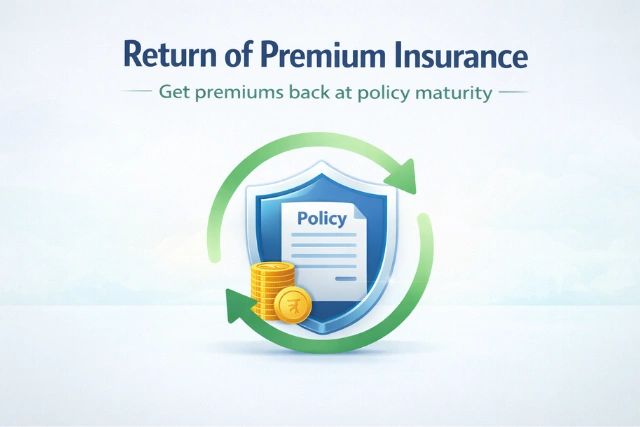
When you buy a regular term insurance plan, you pay premiums for years, and if you outlive the policy, you get nothing back. Many people hesitate to buy term insurance because they feel they receive nothing back if they survive the policy term. This is exactly where the question — what is Return of Premium in Term Insurance? — becomes important. It's a variant designed for people who want the safety net of term cover but also want their money back if they survive the policy term.
At E-Insure First, we've noticed that more first-time buyers, especially salaried professionals in their late 20s and 30s, are leaning toward a term insurance plan with return of premium because it feels less like an "expense" and more like a structured savings cushion. Buyers comparing long-term protection plans should also understand why insurance is essential for financial security before choosing between regular term insurance and TROP plans.
Quick Answer: What Is Return of Premium in Term Insurance? Return of Premium in term insurance (TROP) is a variant of a term plan where the insurer refunds all premiums paid if the policyholder survives the entire policy term. If the insured passes away during the term, the nominee receives the full sum assured. It offers life insurance protection along with a guaranteed refund of premiums at maturity, but premiums are higher than a regular term plan.
What is Return of Premium in Term Insurance? Meaning Explained
A Return of Premium term plan, commonly called TROP, is a type of term life insurance that pays back all the premiums you've paid if you survive the policy term. If something unfortunate happens during the term, your nominee receives the full sum assured — just like a standard term plan. So you get the protection of pure term cover, plus a maturity benefit if you outlive the policy.
In simple words, return of premium term life insurance combines two ideas: financial protection for your family and a guaranteed refund of premiums at maturity. However, the main drawback is that the premiums are significantly higher than regular term insurance plans. You pay a noticeably higher premium compared to a regular term plan for the same sum assured.
"Most buyers don't realise that the 'returned premium' doesn't include GST or rider charges. We always tell clients to compare the actual refund value before committing," says Sunil Goyal, Director at E-Insure First.
How Does a Term Insurance Plan With Return of Premium Work?
Let's understand it with a simple example. Suppose Rohan, 30, buys a term insurance with return of premium for ₹1 crore cover and a 30-year term. His annual premium is ₹18,000.
| Scenario | What Happens |
| Rohan passes away during the 30-year term | Nominee receives ₹1 crore sum assured |
| Rohan survives the full 30-year term | He receives ₹5,40,000 (total premiums paid) back |
| Rohan stops paying premiums midway | Policy lapses; refund depends on surrender value rules |
The refunded amount is tax-free under Section 10(10D) of the Income Tax Act, subject to conditions. Investors comparing insurance and savings products may also benefit from understanding the power of compounding interest over long periods.
Regular Term Plan vs Term Insurance With Return of Premium
This comparison helps buyers understand whether paying extra for premium returns is truly worth it.
| Feature | Regular Term Plan | Term Plan With Return of Premium |
| Premium Cost | Low | 2x to 3x higher |
| Maturity Benefit | None | All premiums refunded |
| Death Benefit | Full sum assured | Full sum assured |
| Best For | Pure protection seekers | Buyers who dislike "zero return" |
| Tax Benefit | 80C + 10(10D) | 80C + 10(10D) |
Best Term Insurance With Return of Premium in India: What to Look For
Searching for the best term insurance with return of premium in India can feel overwhelming because nearly every insurer now offers a TROP variant. Instead of chasing brand names blindly, evaluate plans on these parameters:
Claim Settlement Ratio
Always check the latest IRDAI claim settlement ratio. Anything above 97% is considered strong. LIC term insurance with return of premium, for example, is popular largely because of LIC's trust factor and high claim settlement track record. Claim settlement ratio data is officially published through IRDAI annual insurance reports.
Premium Affordability Over the Long Run
Use a term insurance with return of premium calculator on the insurer's website or aggregator platforms. Plug in your age, sum assured, term, and smoking status. Many buyers are surprised by how much higher TROP premiums can be compared to standard term plans.
Rider Availability
Look for critical illness, accidental death, and waiver of premium riders. These strengthen the policy significantly.
Policy Term Flexibility
The best term insurance plan with return of premium usually offers flexible terms between 10 and 40 years. Pick one that aligns with your retirement age.
Who Should Buy Return of Premium Term Life Insurance?
This plan isn't for everyone. It suits people who:
- Feel mentally uncomfortable paying premiums with “no return”
- Are disciplined savers but want a forced savings component
- Have stable long-term income and can afford higher premiums
- Want guaranteed money back without market-linked risk
Who Should Choose a TROP Plan?
| Buyer Type | Is TROP Suitable? | Why |
|---|---|---|
| Salaried Professionals | Yes | Prefer guaranteed returns |
| Conservative Investors | Yes | Avoids market risk |
| Young Investors Comfortable With SIPs | Usually No | Better long-term returns possible elsewhere |
| First-Time Insurance Buyers | Yes | Psychological comfort |
| High-Risk Investors | No | TROP returns are relatively low |
It may not suit those who prefer maximum cover at minimum cost - a regular term plan plus a separate SIP usually delivers better returns than TROP over 25–30 years. Before choosing SIP-based investing, beginners can explore this guide on understanding SIPs for long-term wealth creation.
Pros and Cons of a Return of Premium Term Plan
| Pros | Cons |
| Money-back assurance at maturity | Significantly higher premium |
| Full life cover during the term | Refund doesn't beat inflation |
| Tax benefits under 80C and 10(10D) | Lower IRR than mutual fund SIPs |
| Psychological comfort | GST and rider charges not refunded |
Is Return of Premium Term Insurance Worth It?
Suggested Snippet Answer Return of Premium term insurance can be worth it for people who want life cover along with guaranteed premium refunds at maturity. While premiums are significantly higher than regular term insurance, TROP plans provide psychological comfort and a savings-like benefit for policyholders who survive the policy term.
Conclusion
A Return of Premium term insurance plan offers a balance between life protection and guaranteed premium refunds. While the premiums are higher than regular term insurance, many buyers prefer the peace of mind that comes with receiving their money back if they survive the policy term. Before choosing a TROP plan, compare premium costs, claim settlement ratios, rider options, and long-term financial goals carefully to ensure the policy matches your needs.
It's also smart to review key considerations for your insurance renewal to avoid coverage gaps later. At E-Insure First, our advisors help families pick the right structure based on income, dependents, and long-term goals rather than just brochure features.
Frequently Asked Questions (FAQs)
1. What is Return of Premium in term insurance?
Return of Premium (TROP) is a type of term insurance where the insurer refunds all base premiums paid if the policyholder survives the policy term. If the insured dies during the term, the nominee receives the full sum assured.
2. Is TROP better than regular term insurance?
TROP plans provide premium refunds at maturity, while regular term plans offer lower premiums and higher affordability. The better option depends on your financial goals and investment discipline.
3. Does Return of Premium include GST refunds?
No. Insurers usually refund only the base premium amount. GST, rider charges, and additional fees are generally not included in the maturity payout.
4. Can I surrender a TROP policy before maturity?
Yes, many TROP plans acquire surrender value after a few years. However, the surrender payout is usually lower than the total premiums paid.
5. Are maturity benefits from TROP taxable?
In most cases, maturity proceeds from TROP plans are tax-free under Section 10(10D), subject to applicable tax rules and premium limits.
Reviewed by Insurance Advisors at E-Insure First
Updated with the latest IRDAI regulations, term insurance tax rules, and TROP policy comparisons for 2026.