Author: Sunil Goyal

  • Top 10 Health Insurance Companies in India 2026

    Top 10 Health Insurance Companies in India 2026

    Written by the E-Insure First Content Team | Reviewed by Sunil Goyal, Director, E-Insure First | Last updated: June 2026

    The top 10 health insurance companies in India, according to claim settlement ratio, network hospital access, customer confidence and plan offerings, are HDFC ERGO, Niva Bupa, Star Health, Care Health, Aditya Birla Health Insurance, ICICI Lombard, TATA AIG, Digit Health, New India Assurance and SBI Health Insurance.

    This guide compares top insurers based on the claim settlement ratio (CSR), cashless hospital network, solvency ratio, and family health insurance coverage to facilitate easy selection.

    This detailed comparison will assist in finding the best health insurance company in India for families, senior citizens, and individual buyers. Before selecting a policy, it’s also helpful to understand the key benefits of health insurance in India and how coverage works.

    Not sure which plan suits your family? Get a free comparison in minutes.

    Compare Plans on E-Insure First →

    Top 10 Health Insurance Companies in India as Per IRDAI: Quick Comparison 2026

    Here’s a side-by-side snapshot of all top health insurance companies to help you compare at a glance:

    Company Claim Settlement Ratio (CSR) Network Hospitals Solvency Ratio Best For
    HDFC ERGO  99.16%  13,000+  2.00  Best overall coverage 
    Niva Bupa  92.4%  10,000+  3.03  Fast claims, global cover 
    Star Health  82.31%  14,000+  2.21  Senior citizens, chronic illness 
    Care Health  92.77%  22,100+  1.68  Widest hospital network 
    Aditya Birla  92.97%  13,000+  1.98  Wellness rewards 
    ICICI Lombard  ~97%  9,000+  2.70+  First-time buyers 
    TATA AIG  ~96%  10,000+  2.0+  High sum insured families 
    Digit Health  99.53%  16,400+  3.85  Digital-first, best CSR 
    New India Assurance  ~88%  9,000+  2.5+  Govt-backed, affordable 
    10  SBI Health Insurance  ~94%  7,000+  2.0+  SBI customers, groups 

    Note: Data sourced from IRDAI Annual Report. CSR figures may vary slightly by calculation methodology.

    Which Is the Best Health Insurance Company in India?

    The best health insurance company in India depends on your needs:

    • Best Overall: HDFC ERGO
    • Highest Claim Settlement Ratio: Digit Health
    • Best for Senior Citizens: Star Health
    • Best Family Health Insurance: Care Health
    • Best for International Coverage: Niva Bupa
    • Best Affordable Option: SBI Health Insurance

    Best Health Insurance Companies in India as per IRDAI: Detailed Overview

    Here is our curated list of top 10 health insurance companies in India, ranked based on a combination of claim settlement ratio CSR, network hospitals, plan variety, and overall customer trust.

    1. HDFC ERGO Health Insurance

    HDFC ERGO is always at the top of the list when it comes to the best health insurance plans in India. HDFC Ltd and ERGO International together have formed a joint venture to provide the combined strengths of immense financial back-up and world-class processes in cashless hospitalization and claim management.

    • 99.16%: Claim Settlement Ratio
    • 13,000+: Network Hospitals
    • 2.00: Solvency Ratio

    Why we recommend it:

    HDFC ERGO’s flagship Optima Secure plan offers 2x coverage from day one, lifetime renewability, and free annual health check-ups. Claims are processed in-house (no TPA delays), which can simplify the overall insurance claim process for policyholders, and they even cover hospitalisation for mental illness — still rare in the industry.

    • Best for: Families and individuals wanting top-tier coverage with minimal claim hassles
    • Pre-existing conditions: Covered after a standard waiting period of 3 years
    • Standout feature: Lifelong renewability & mental health coverage

    2. Niva Bupa Health Insurance (formerly Max Bupa)

    Niva Bupa Health Insurance is one of India’s most recognised standalone health insurers. Formerly known as Max Bupa, Niva Bupa’s strength lies in its customer-first approach; claims are processed directly by an in-house team, and the insurer promises to initiate claim processing within 30 minutes of intimation.

    • 92.4%: Claim Settlement Ratio
    • 10,000+: Network Hospitals
    • 3.03: Solvency Ratio

    Why we recommend it:

    Niva Bupa provides global cover in over 190 countries and one of the most flexible health insurance policies for families in India. They are known for their superior customer service, with most cashless approvals done within 20 minutes of being processed (90% plus).

    • Best for: Frequent travellers, NRIs, and families looking for global health protection
    • Pre-existing disease: Waiting period as low as 1 year in some plans
    • Standout feature: International coverage, fast 30-min claim initiation

    3. Star Health and Allied Insurance

    Star Health is the largest standalone health insurance company in India by premium underwritten. With dedicated plans for senior citizens, diabetics, and cardiac patients, they offer unmatched breadth in their product portfolio. Their in-house claim settlement team is a significant advantage for seamless cashless treatment.

    • 82.31%: Claim Settlement Ratio
    • 14,000+: Network Hospitals
    • 2.21: Solvency Ratio

    Why we recommend it:

    This is a good health insurer for a family member with a pre-existing disease such as diabetes or heart disease. The disease-specific policies offered by Star Health are a really good option with realistic waiting periods and a good cover as opposed to just sales rhetoric.

    • Best for: Senior citizens, families with chronic illness history
    • Standout feature: Specialised plans for diabetes, cardiac conditions & HIV

    4. Care Health Insurance (formerly Religare)

    Formerly Religare Health Insurance, Care Health is celebrated for its innovative product features. Their flagship plan, Care Supreme, offers unlimited automatic recharge of sum insured, annual health check-ups for all members regardless of claims, and strong OPD coverage options. They have a wide range of plans covering individuals, families, and those without an age cap.

    • 92.77%: Claim Settlement Ratio
    • 22,100+: Network Hospitals
    • 1.68: Solvency Ratio

    Why we recommend it:

    Care Health has one of the widest cashless hospital networks in India at 22,100+ hospitals. This makes them an excellent choice if cashless hospitalization accessibility is your top priority.

    • Best for: Comprehensive family floater plans with high-end features
    • Standout feature: Unlimited sum insured auto-recharge, no upper age limit plans

    5. Aditya Birla Health Insurance

    Aditya Birla Health Insurance Co. Ltd is a subsidiary of Aditya Birla Capital and one of the fastest-growing standalone health insurers. What sets them apart is their beyond-insurance approach; they don’t just pay claims, they actively incentivise you to stay healthy with gym memberships, wellness coaches, nutritionists, and care managers.

    • 92.97%: Claim Settlement Ratio
    • 13,000+: Network Hospitals
    • 1.98: Solvency Ratio

    Why we recommend it:

    Aditya Birla is perfect for health-conscious individuals who want more than just hospitalisation coverage. You can also learn more about whether Aditya Birla Health Insurance is good before making a decision. Their HealthReturns feature can refund up to 100% of your premium if you meet health goals — a truly unique proposition in the best health insurance in India space.

    • Best for: Young professionals, wellness-focused individuals & families
    • Standout feature: HealthReturns, AYUSH coverage, 2100+ pharmacy discounts

    6. ICICI Lombard General Insurance

    ICICI Lombard is India’s largest private sector general insurer and a household name in health insurance plans. Their Complete Health Insurance product is one of the most purchased individual health insurance policies in India, offering a clean, easy-to-understand policy structure.

    • ~97%: Claim Settlement Ratio
    • 9,000+: Network Hospitals
    • 2.70+: Solvency Ratio

    Why we recommend it:

    ICICI Lombard’s brand trust, robust digital infrastructure, and strong customer service make it a safe choice for those buying health insurance for the first time. Their claim-filing app is intuitive and widely praised.

    • Best for: First-time buyers, urban individuals and families
    • Standout feature: Seamless digital claims, brand reliability, wide product range

    7. TATA AIG General Insurance

    TATA AIG combines the legacy of the Tata Group with AIG’s international insurance expertise. Their health insurance plans are well-structured, transparent, and well-regarded for handling claims fairly. TATA AIG is a strong contender, especially for health insurance plans for families with multiple coverage tiers.

    • ~96%: Claim Settlement Ratio
    • 10,000+: Network Hospitals
    • 2.0+: Solvency Ratio

    Why we recommend it:

    TATA AIG’s MediCare Premier plan stands out for its OPD coverage and high-sum insured options up to ₹3 crore. Tata’s brand reputation for fairness adds an extra layer of confidence when choosing the right health insurance partner.

    • Best for: Families wanting high coverage limits & OPD benefits
    • Standout feature: Sum insured up to ₹3 crore, OPD coverage

    8. Digit Health Insurance

    Digit is a unicorn in India’s InsurTech space and is rapidly changing how health insurance is bought and experienced. Their entire process — from purchase to claim — is paperless and smartphone-led. With an outstanding claim settlement ratio, Digit is a strong choice for digital-first users.

    • 99.53%: Claim Settlement Ratio
    • 16,400+: Network Hospitals
    • 3.85: Solvency Ratio

    Why we recommend it:

    Digit stands at the top of this list of top 10 health insurance providers for CSR, a great accomplishment given that they are a relatively young player in the market. Their solvency ratio of 3.85 is also one of the highest numbers among the players, which shows their great financial standing.

    • Best for: Tech-savvy individuals, millennials, gig economy workers
    • Standout feature: Highest CSR (99.53%), fully paperless process

    9. New India Assurance

    New India Assurance is a government-backed insurance company and one of the oldest general insurers in India. For those who prioritise stability and government assurance over digital convenience, New India is a dependable choice. Their Mediclaim policies are widely accepted, especially in Tier 2 and Tier 3 cities.

    • ~88%: Claim Settlement Ratio
    • 9,000+: Network Hospitals
    • 2.5+: Solvency Ratio

    Why we recommend it:

    New India Assurance is among the top 5 govt health insurance companies in India and has been operational since 1919. Their policies are typically affordable with standard pre-existing disease waiting periods and solid, no-nonsense coverage.

    • Best for: Conservative buyers, senior citizens, Tier 2/3 city residents
    • Standout feature: Government trust, pan-India presence, affordable premiums

    10. SBI Health Insurance

    SBI Health Insurance, backed by the State Bank of India, is a trusted name in individual health insurance and individual medical insurance. With a solid distribution network across India through SBI’s vast banking reach, SBI Health is increasingly popular for both retail and group health insurance plans.

    • ~94%: Claim Settlement Ratio
    • 7,000+: Network Hospitals
    • 2.0+: Solvency Ratio

    Why we recommend it:

    SBI Health Insurance offers competitive premiums, especially for health insurance plans for family monthly premium seekers. Their Arogya Premier and Arogya Supreme plans offer a wide range of sum insured options and no-claim bonuses.

    • Best for: SBI banking customers, families wanting affordable group plans
    • Standout feature: Backed by SBI, competitive premiums, growing cashless network

    Ready to find your perfect plan? Our experts at eInsureFirst compare all these insurers for you — for free!

    Get Free Quotes Now →

    How to Choose the Best Health Insurance Company in India?

    India’s healthcare costs have risen sharply over the last decade. A single hospitalisation for something as common as appendicitis can cost anywhere from ₹50,000 to ₹2,00,000. A critical illness like cancer? Potentially ₹10 lakh or more.

    According to the IRDAI Annual Report, Indian health insurers paid out ₹94,247 crore across 3.26 crore health insurance claims — that’s an industry-wide settlement rate of 87.5% by volume. The remaining 12.5% represents claims that were delayed, partially settled, or rejected. Choosing a company with a high claim settlement ratio dramatically reduces the risk of being in that 12.5%.

    Pro Tip: A claim settlement ratio (CSR) above 90% is generally considered healthy and reliable. Anything below 85% should make you pause and investigate further before buying.

    How to Evaluate Health Insurance Companies in India

    Before diving into our list, here’s what you should look at when choosing the right health insurance company:

    Claim Settlement Ratio (CSR)

    The percentage of claims settled vs. total claims received. Higher is better. This is the single most important trust signal.

    Cashless Hospitalization Network

    Does the insurer have empanelled hospitals near you? Cashless treatment means the insurer pays the hospital directly — no out-of-pocket scramble during a crisis.

    Sum Insured Options

    Can you get an adequate sum insured for your city’s healthcare costs?

    Waiting Periods for Pre-Existing Diseases

    Most plans have waiting periods for pre-existing diseases ranging from 1 to 4 years. Shorter is better.

    Customer Support

    Is there a responsive, in-house customer service team or do they rely heavily on TPAs (Third Party Administrators)?

    Premium vs. Coverage

    Affordable premiums are great, but not at the cost of thin coverage.

    How to Choose the Best Health Insurance Company in India

    Knowing the top health insurance companies is step one. Choosing the right plan within that company is step two. Here’s a simple framework:

    1. Start With Your Health Profile

    Do you have any pre-existing conditions like diabetes, hypertension, or thyroid disorders? If yes, look specifically at plans with shorter waiting periods for pre-existing diseases. Star Health and Niva Bupa offer some of the most accommodating policies in this area.

    2. Match Your Budget to Adequate Coverage

    A ₹3 lakh sum insured may have been enough in 2015 — today, in metro cities, ₹10 lakh for an individual and ₹15–20 lakh for a family floater is a safer baseline. Good health insurance isn’t just cheap — it’s sufficient.

    3. Prioritise Cashless Hospital Proximity

    During a medical emergency, the nearest cashless hospital matters more than anything else. Before buying, check the insurer’s hospital locator tool for hospitals within 5–10 km of your home and workplace. Care Health’s 22,100+ hospital network gives maximum flexibility here.

    4. Check the Claim Settlement Ratio CSR

    Insurers’ marketing should not be considered. Always check the insurer’s claim settlement ratio CSR from the IRDAI Annual Report. Digit Health (99.53%) and HDFC ERGO (99.16%) outshine in this regard.

    5. Don’t Forget Senior Citizen Needs

    If you’re buying for a senior citizen parent, choose a plan specifically designed for older age groups. Star Health’s Senior Citizen Red Carpet plan and Niva Bupa’s Senior First plan are built with realistic co-payment terms and comprehensive coverage for age-related illnesses.

    Quick Tip: Always read the list of exclusions carefully before buying. Some plans exclude specific treatments like cataract surgery for the first 2 years or have sub-limits on room rent. Understanding these nuances is what separates a good health insurance plan from a great one.

    Why Claim Settlement Ratio Matters

    The claim settlement ratio health insurance India metric shows how efficiently insurers settle claims.
    A CSR above 90% is considered strong. This is why companies like Digit Health and HDFC ERGO lead the list of the best health insurance companies in India. Understanding what insurance fraud is can also help policyholders avoid claim-related complications and rejections.

    Best Health Insurance Plans for Families and Senior Citizens

    Best Health Insurance for Families

    • Care Health
    • HDFC ERGO
    • SBI Health

    Best Health Insurance for Senior Citizens

    • Star Health
    • Niva Bupa

    Best Health Insurance for Young Professionals

    • Aditya Birla
    • Digit Health

    Final Thoughts

    Picking from the list of top 10 health insurance companies in India isn’t about finding the most expensive or the most popular plan; it’s about finding the right match for your life stage, health needs, and budget.

    Whether you go with Digit Health for its unbeatable claim settlement ratio CSR, Star Health for its sheer hospital network depth, or Aditya Birla for its wellness-first philosophy, the important thing is that you’re covered before a medical emergency arrives.

    At E-Insure First, we help you compare health insurance plans from all major insurers side by side, so you can make an informed choice with confidence. Don’t wait for a health scare to find out your plan wasn’t good enough.

    Start your health insurance comparison today — it takes less than 2 minutes.

    Frequently Asked Questions (FAQs)

    Which is the No. 1 health insurance company in India for claim settlement?

    As per recent data, Digit Health Insurance leads with a 99.53% claim settlement ratio, followed closely by HDFC ERGO at 99.16%. Both are excellent choices for hassle-free claims.

    What is a good Claim Settlement Ratio for health insurance in India?

    A CSR above 90% is considered reliable. The top 10 health insurance companies in India as per IRDA generally maintain CSRs between 82% and 99%. Always cross-check CSR figures against the official IRDAI annual report.

    Which health insurance is best for senior citizens in India?

    Star Health Insurance (Senior Citizen Red Carpet) and Niva Bupa (Senior First) are among the best options for senior citizens. These plans cater specifically to pre-existing conditions common in older age groups with manageable waiting periods.

    Should I buy individual or family floater health insurance?

    For young families with children, a family floater health insurance plan for families is cost-effective. However, if any family member is a senior citizen or has significant pre-existing conditions, individual plans may offer better-tailored coverage.

    How many health insurance companies are there in India?

    As of the latest IRDAI data, there are approximately 27 general insurance companies in India offering health products, of which 5 are standalone health insurance companies. All are regulated by IRDAI.

    Can I switch (port) my health insurance to a better company?

    Yes! IRDAI regulations allow health insurance portability. Here’s a detailed guide on how to port health insurance in India successfully. You can switch your medical insurance policy to another insurer while retaining your accumulated waiting period credits. The process must be initiated before your renewal date.

  • How to Port Health Insurance in India: A Complete Step-by-Step Guide

    How to Port Health Insurance in India: A Complete Step-by-Step Guide

    Written by the E-Insure First Content Team | Reviewed by Sunil Goyal, Director, E-Insure First | Last updated: May 2026

    The process of changing your health insurer is quite easy and doesn’t need to be a hectic job. Are you unsatisfied with your current health policy or looking out for a better scheme for your health needs? Transferring your health insurance is a good decision without giving up your benefits. Health insurance portability allows you to switch from your current health plan to a new insurer with accumulated waiting periods and no-claim bonuses still applicable. To understand how insurance protects your finances, read how health insurance safeguards your finances in real life situations.

    We have put together a step-by-step process on how to port your health insurance in India. We will cover the important aspects such as IRDAI rules, eligibility criteria and tips for a smooth switch. If you wish for a wider health cover or to reduce your premiums or a better service, we will give you the right decision for your health policy.

    What is Health Insurance Portability?

    Have you ever been in a position when your current health insurance policy is just not working out for you? Your health insurance premiums have become quite heavy, or your nearby hospital does not feature in your policy network, or then the claim procedures are a huge hassle. Well, you are not bound to stay where you are. Health Insurance portability is your right in India. It allows you to move your health insurance from one insurance company to another, while continuing to avail your benefits.

    Essentially, portability allows you to move your current health insurance from one insurer to another of your choice, while retaining major benefits like waiting periods already passed and your accrued No Claim Bonuses. Learn more about what is NCB in insurance and how it works. The right of health insurance portability was introduced in India and is regulated by Insurance Regulatory and Development Authority of India (IRDAI) from October 2011, with India becoming one of the countries to give its policyholders an enormous level of health insurance portability.

    In short, Health insurance portability is the process of switching your health insurance provider while retaining benefits like waiting period credit and no-claim bonus. It is allowed only at policy renewal and regulated by IRDAI in India.

    This guide will tell you how to port health insurance step-by-step.

    • 2011: IRDAI introduced portability
    • 45 Days: notice required
    • 15 Days:  insurer must respond
    • 100% Waiting period: credit carried over

    Health Insurance Portability – Quick Overview

    Feature Details
    Porting Allowed Only at renewal
    Notice Period Minimum 45 days
    Insurer Response Time 15 days
    Waiting Period Credit 100% carry forward
    NCB Transfer Yes
    Online Porting Available

    Why Should You Port Your Health Insurance?

    Transferring health insurance policy should not only be the choice to find the cheap health insurance plans, but also it should ensure the actual plan is being used in actual. The most popular reasons why policyholders choose to port are:

    • Your existing health insurance premiums have risen steeply at renewal without any improvement in coverage
    • The claim settlement ratio of your current health insurance company is poor or getting worse
    • You’re not satisfied with the network of cashless hospitals in your city
    • Your current health insurance plan doesn’t cover critical illnesses, maternity, or OPD you now need
    • A new health insurance company offers better accumulated benefits, lower co-pays, or higher room rent limits
    • You want to add family members or change your sum insured at renewal time
    • You’re moving cities and your existing insurer has limited hospital network coverage in the new location

    Quick fact: According to IRDAI guidelines, every policyholder has the right to port their health insurance plan at the time of renewal. You do not need a reason to justify the switch — it is your right as a consumer.

    IRDAI Rules You Must Know Before You Port

    The Insurance Regulatory and Development Authority of India (IRDAI) – India’s insurance regulatory authority – has set clear rules to protect you during the portability process. Understanding these keeps you in control.

    IRDAI Rule What it means for you
    Submit portability request at least 45 days before renewal date You must initiate the port no later than 45 days before your policy expires
    New insurer must respond within 15 days If they don’t respond in 15 days, they are deemed to have accepted your portability request
    Continuity of waiting periods Any waiting periods already served on your existing health insurance must be credited by the new insurer
    Pre-existing conditions must be covered The new health insurance company cannot deny coverage for pre-existing conditions you already disclosed
    No-claim bonus (NCB) portability Claim bonuses you earned with your previous insurer must be honoured by the new insurer
    Only allowed at time of renewal You cannot port mid-policy — portability only works at the time of renewal

    Step-by-Step: How to Port Health Insurance policy in India

    The portability process is simpler than most people think. Here is exactly how health insurance portability works in India, broken down into clear steps:

    1. Research new health insurance plans – Compare health insurance companies on parameters like premium, sum insured, network hospitals, claim settlement ratio, and terms and conditions. Use aggregator platforms to get multiple quotes side by side. You can also check best health insurance in India tips before choosing a plan.

    2. Submit your portability request 45 days before renewal – This is the most critical step. Approach your chosen new health insurance company and fill out the portability proposal form at least 45 days before your renewal date. Missing this deadline means you’ll have to wait another year.

    3. Fill out the portability proposal form – Provide details of your existing health insurance policy, your health history, and your pre-existing conditions accurately. Hiding information can lead to claim rejections later.

    4. New insurer contacts your existing insurer – The new health insurance company will reach out to your existing insurer via the IRDAI’s online portability portal to obtain your policy details, claim history, and accumulated benefits.

    5. Underwriting and offer – The new insurer evaluates your profile and makes an offer. They must respond within 15 days of receiving your information from the existing insurer. To understand approvals better, read insurance claim process explained step by step.

    6. Review the new policy’s terms and conditions – Do not skip this. Check the new waiting periods (if any added), room rent caps, co-payment clauses, and exclusions before you agree.

    7. Pay the premium and get covered – Once you accept the offer and pay the premium, your new policy kicks in from the renewal date of your old policy. Your old coverage does not lapse in between.

    Best tip: Don’t only 45 days prior to renewal, and start the portability request 60 days out! You’ll have additional time to shop around, bargain and complete paperwork without stressing!

    How to Port Health Insurance Online in India

    Thanks to the IRDAI’s digital push, you can now port your health insurance policy entirely online — no branch visits, no paperwork queues. Here is how to port health insurance online:

    • Visit the official website of the health insurance company you want to switch to
    • Navigate to the “Port Health Insurance” or “Health Insurance Portability” section
    • Fill in your existing policy details — policy number, insurer name, sum insured, and renewal date
    • Complete the online proposal form with personal, medical, and nominee details
    • Upload required documents (list below) digitally
    • The new insurer processes your portability request through IRDAI’s online portal
    • Receive a quote, review it carefully, and pay the premium online
    • Download your new health insurance policy document

    Warning: Make sure the new insurer you choose is registered with IRDAI. Never make any payment or share sensitive data on unofficial websites or through unverified agents.

    What Happens to Your Waiting Periods and Accumulated Benefits?

    This is the question most people worry about when they think about porting. Let’s clear it up once and for all.

    Benefit type What gets carried over What may reset
    Waiting periods (pre-existing conditions) Full credit for time already served None — IRDAI mandates full credit
    No-claim bonus / claim bonuses NCB earned with old insurer is honoured New insurer’s NCB structure may differ
    Initial waiting period (30-90 days) If already served, carries forward Not applicable if existing policy is active
    Disease-specific waiting periods Credited proportionally Some new insurers may add conditions — check terms
    Sum insured continuity Guaranteed at same level Upgrades in sum insured may attract fresh waiting
    Accumulated benefits (loyalty additions) Depends on new insurer’s policy terms Insurer-specific loyalty benefits may not transfer

    In short – your waiting periods for pre-existing conditions and claim bonuses are protected by law. What is not guaranteed are insurer-specific loyalty perks or wellness programs that are proprietary to your existing health insurance company.

    When Should You Avoid Porting Health Insurance?

    • If you are already undergoing treatment
    • If your waiting period is about to complete
    • If new policy has higher exclusions
    • If premium difference is minimal

    Documents Required for Health Insurance Portability

    Keep these documents ready before you submit your portability request to ensure a smooth, fast process:

    • Filled and signed portability proposal form from the new insurer
    • Copy of your existing health insurance policy document
    • Previous policy renewal notices (last 3–5 years if available)
    • Claim history statement from your existing insurer
    • Medical reports for any pre-existing conditions declared
    • KYC documents – Aadhaar, PAN, passport-size photos
    • Discharge summaries for any hospitalisation in the past 3 years

    Port Health Insurance: Do’s and Don’ts

    Do this  Avoid this 
    Start the process at least 45 days before the renewal date Waiting until the last week before renewal – you’ll lose the window
    Disclose all pre-existing conditions honestly in the proposal form Hiding health conditions to get a lower premium leads to claim rejection
    Compare at least 4–5 health insurance plans before choosing Choosing a new plan based on premium alone without checking coverage
    Read the terms and conditions of the new policy carefully Check that the new policy is identical feature-for-feature to the old one
    Ensure the new insurance provider is IRDAI registered Making payment or revealing personal information to an un-registered intermediary
    Maintain copies of documents submitted for your personal reference Relying only on verbal confirmation  always get written acknowledgement

    Frequently Asked Questions

    How to Port Health Insurance Policy in India?

    Submit a portability request to your chosen new health insurance company at least 45 days before your renewal date. Fill out the portability proposal form, provide your existing policy details, complete underwriting, and pay the premium. Your new coverage starts from the renewal date of your old policy.

    Can I Port My Health Insurance Online?

    Yes. Most health insurance companies in India allow you to port health insurance online through their official websites. You fill out the proposal form digitally, upload documents, and complete payment online. The process is facilitated through IRDAI’s centralised portability portal.

    Will My Waiting Period Reset When I Port Health Insurance?

    No. Under IRDAI regulations, your new health insurance company must give full credit for any waiting periods you have already completed — including those for pre-existing conditions. This is one of the biggest protections portability offers.

    What is the 45-day Rule in Health Insurance Porting?

    The IRDAI has stated that the porting application needs to be submitted to the new insurer not later than 45 days prior to the renewal of your present policy. Should you fail to meet this condition, you can port only at the next renewal.

    Are Claim Bonuses (NCB) Transferred When I Port?

    Yes. The accumulated no-claim bonuses you have earned with your existing insurer must be honoured by the new health insurance company as per IRDAI guidelines. However, the structure of how NCB is applied may differ between insurers.

    Can I Increase My Sum Insured When Porting?

    Yes, you can request a higher sum insured when porting. However, the additional amount above your existing sum insured may be subject to fresh waiting periods. The existing sum insured transfers with full continuity of benefits.

    What if the New Insurer Rejects My Portability Request?

    A new insurer can only reject your portability request on underwriting grounds – and they must communicate this within 15 days. If they fail to respond in 15 days, IRDAI regulations deem the request accepted. You can also raise a grievance with IRDAI’s Integrated Grievance Management System (IGMS).

    Ready to port your health insurance?

    Start comparing plans today – remember, you need to initiate at least 45 days before your renewal date.
    Compare plans now check IRDAI guidelines!

  • Star Health Insurance IPO GMP: Latest Updates & Analysis

    Star Health Insurance IPO GMP: Latest Updates & Analysis

    If you are tracking IPOs, you have probably heard about star health insurance ipo gmp. Grey Market Premium (GMP) gives an early hint about how an IPO might perform on listing day. Many investors watch GMP before applying, especially when evaluating the company’s overall insurance performance and reputation.

    In this blog, we will break down everything about star health insurance ipo gmp, including trends, price insights, and what it means for investors. The goal is to keep things simple so even beginners can understand and make informed financial decisions before investing.

    What is Star Health Insurance IPO GMP?

    Before diving deeper, let’s understand GMP in simple terms. GMP (Grey Market Premium) is the price at which IPO shares are traded unofficially before listing. It reflects market sentiment, which is often influenced by how well the company performs in areas like claims and customer satisfaction.

    For example:

    • If GMP is positive → strong demand
    • If GMP is negative → weak demand

    So, tracking gmp of star health insurance ipo helps investors estimate potential listing gains.

    Star Health Insurance IPO GMP Today

    The star health insurance ipo gmp today keeps changing based on demand and market conditions. For official stock market updates and listing data, you can refer to the National Stock Exchange of India (NSE).

    Here’s a simple example table to understand GMP trends:

    Date GMP Price (₹) Trend
    Day 1 +30 Positive
    Day 2 +20 Slight dip
    Day 3 +10 Weakening
    Listing Eve +5 Neutral

    Note: These numbers are for explanation. Always check real-time updates before making decisions.

    A falling GMP may indicate reduced investor interest, while a rising GMP suggests strong demand, often driven by trust in the brand and its service quality.

    Star Health Insurance IPO GMP Price Insights

    The star health insurance ipo gmp price depends on several factors:

    1. Market Sentiment

    If the overall stock market is bullish, GMP usually increases.

    2. Company Fundamentals

    Strong financials and brand value can boost GMP.

    3. Subscription Levels

    Higher subscription means higher demand, leading to better GMP.

    4. News & Updates

    Any positive or negative news can quickly change GMP.

    That’s why star health insurance ipo gmp price today may differ from previous days.

    Star Health and Allied Insurance IPO GMP Explained

    The full name is Star Health and Allied Insurance IPO GMP, and it is important because:

    • It is one of India’s leading standalone health insurers, known for its wide range of health plans and competitive offerings in the insurance market.
    • It has a strong customer base
    • It operates in a growing sector (health insurance)

    Because of this, investors showed strong interest initially. However, GMP trends can still fluctuate based on broader market conditions.

    Tracking Star Health Insurance IPO GMP on IPO Watch & Chanakya

    Many investors track GMP on different platforms like:

    IPO Watch

    The term star health insurance ipo gmp IPO Watch is commonly searched because IPO Watch provides daily GMP updates.

    Chanakya

    Similarly, star health insurance ipo gmp chanakya is another popular source for grey market trends.

    Both platforms give approximate GMP values, but remember:

    GMP is unofficial and not guaranteed.

    Should You Rely on GMP?

    This is a very important question.

    While star health insurance ipo gmp gives useful insights, it should not be the only factor.

    Pros of GMP

    • Quick market sentiment indicator
    • Helps estimate listing price
    • Useful for short-term investors

    Cons of GMP

    • Unofficial and unregulated
    • Can be manipulated
    • Changes quickly

    Smart investors combine GMP with deeper research about the company’s services and real-world experience.

    • Financial analysis
    • Company growth potential
    • Long-term outlook

    Key Takeaways for Investors

    • Star health insurance ipo gmp today shows market mood but not certainty
    • GMP trends matter more than a single day value
    • Always compare GMP with fundamentals
    • Avoid making decisions based only on grey market signals

    Final Thoughts

    Tracking star health insurance ipo gmp can give you a quick snapshot of market expectations. However, smart investing requires a bigger picture.

    Look beyond GMP and understand the company’s long-term business model and opportunities in the insurance sector. Study the company, understand the risks, and invest with a clear strategy. That’s how you turn IPO opportunities into long-term gains.

    Frequently Asked Questions (FAQs)

    1. What is star health insurance ipo gmp?

    It is the grey market premium at which the IPO shares are traded unofficially before listing.

    2. Where can I check star health insurance ipo gmp today?

    You can check it on platforms like IPO Watch and Chanakya, which provide daily updates.

    3. Is star health insurance ipo gmp price reliable?

    Not completely. It is an unofficial indicator and should not be the only factor in your decision.

    4. Why does gmp of star health insurance ipo change daily?

    It changes due to market demand, investor sentiment, subscription levels, and news updates.

    5. What does negative GMP mean?

    A negative GMP suggests weak demand and possible listing below issue price.

    6. Should I invest based on star health insurance ipo gmp ipowatch data?

    No. Use it only as a reference. Always analyze company fundamentals before investing.

  • How to Check NCB in Bike Insurance: Easy Guide

    How to Check NCB in Bike Insurance: Easy Guide

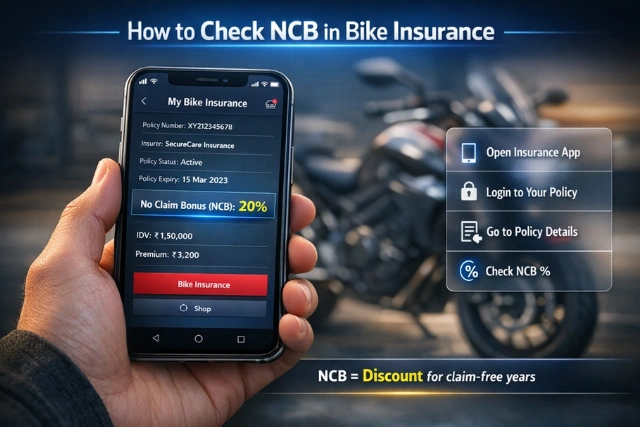
    If you are wondering how to check NCB in bike insurance, you are not alone. Many bike owners don’t pay attention to their No Claim Bonus (NCB), even though it can save a good amount on premiums. Before moving into this, you must know what is the meaning of NCB in Insurance first.

    NCB is a reward given by insurance companies when you don’t make any claims during your policy period. Knowing how to check NCB in a bike insurance policy helps you avoid losing this benefit and ensures you get the right discount.

    What is NCB in Bike Insurance?

    Before learning how to check it, let’s first understand what NCB in bike insurance is. NCB (No Claim Bonus) is a discount offered on your bike insurance premium for every claim-free year. The longer you go without a claim, the higher your discount.

    Here’s how it usually works:

    Claim-Free Years NCB Discount
    1 Year 20%
    2 Years 25%
    3 Years 35%
    4 Years 45%
    5 Years 50%

    This means if you maintain a clean record, you can reduce your premium by up to 50%.

    How to Check NCB in Bike Insurance

    Let’s now understand how to check NCB in bike insurance in simple steps.

    1. Check Your Policy Document

    The easiest way is to look at your current insurance policy. You will find the NCB percentage mentioned clearly in the document. It is usually listed under premium details or discounts.

    2. Visit Insurance Company Website

    Most insurers allow you to log in and check your policy details online.

    Steps:

    • Visit the insurer’s website
    • Log in with your policy number
    • Go to policy details
    • Check the NCB section

    This is one of the fastest ways to know how to check NCB in a bike insurance policy, especially if you are planning to compare it with your car insurance NCB as well.

    3. Use Renewal Notice

    Before renewal, insurance companies send a reminder notice.

    This notice includes:

    • Previous NCB
    • Eligible NCB for next year

    So if you are asking how to check the previous NCB in bike insurance, this document is very useful.

    4. Contact Customer Support

    If you cannot find your documents, simply call customer care.

    Provide your policy number, and they will tell you your NCB instantly.

    5. Check Through the Insurance Agent

    If you bought your policy through an agent, they can help you check your NCB details quickly.

    How to Check Previous NCB in Bike Insurance

    Sometimes, you may want to know your past NCB, especially when switching insurers.

    Here’s how to do it:

    Policy History

    Your previous policy documents will show the NCB you earned.

    NCB Certificate

    When you change insurers, you may get an NCB certificate. This document confirms your claim-free history.

    Previous Insurer

    You can also contact your old insurance company to confirm your NCB.

    Knowing how to check previous NCB in bike insurance is important when you are renewing or porting your policy.

    Why NCB is Important

    Understanding what NCB in bike insurance is not enough. You should also know why it matters.

    Saves Money

    NCB reduces your premium significantly over time.

    Encourages Safe Riding

    Since claims reduce NCB, riders tend to drive more carefully.

    Transferable Benefit

    NCB belongs to you, not the bike. You can transfer it to a new vehicle, which highlights how insurance benefits can support your long-term financial planning.

    Things That Affect Your NCB

    Here are some key points that impact your NCB, based on standard motor insurance guidelines followed across India under the Insurance Regulatory and Development Authority of India (IRDAI):

    Situation Impact on NCB
    No claim made NCB increases
    Claim made NCB resets to 0
    Policy lapse (90+ days) NCB lost
    Switching insurer NCB transferable

    Tips to Protect Your NCB

    If you want to keep your NCB safe, follow these tips:

    • Avoid small claims; pay minor repairs yourself
    • Renew your policy on time
    • Choose the NCB protection add-on if available
    • Keep your documents safe

    These simple habits help you retain your bonus and reduce costs, especially when combined with add-ons like NCB protection.

    Common Mistakes to Avoid

    Many people lose their NCB due to small mistakes.

    • Not checking policy details
    • Missing renewal deadlines
    • Claiming for minor damages
    • Entering the wrong NCB during renewal

    Always double-check your details when learning how to check NCB in bike insurance.

    Conclusion

    Now that you understand how to check NCB in bike insurance, you can easily track your discount and make smarter decisions.

    Always review your policy, keep records safe, and avoid unnecessary claims. This way, you can enjoy lower premiums year after year.

    Frequently Asked Questions (FAQs)

    1. How to check NCB in bike insurance?

    You can check it in your policy document, insurer’s website, renewal notice, or by contacting customer support.

    2. What is NCB in Bike Insurance?

    NCB is a discount on your premium given for not making any claims during the policy period.

    3. How to Check Previous NCB in Bike Insurance?

    You can check previous policy documents, the NCB certificate, or contact your old insurer.

    4. Can I Transfer My NCB to a New Bike?

    Yes, NCB is linked to the policyholder, not the vehicle, so it can be transferred.

    5. What Happens to NCB after a Claim?

    Your NCB usually becomes zero after making a claim unless you have an NCB protection add-on.

    6. Where is NCB Mentioned in the Policy?

    It is usually listed under the premium breakdown or discount section in your insurance policy.

  • How to Check Bike Insurance Validity in India (Complete Guide)

    How to Check Bike Insurance Validity in India (Complete Guide)

    If you have been wondering how to check bike insurance validity, you are not by yourself. Many bike owners lose sight of when their bike payments end, only realizing it has happened when they find out there has not been an end date for their next payment. It is important for all states that one maintains a current payment on all vehicles or the owner can be penalized as well as face problems if an instance where valid payment is proven to the respective state occurs.

    According to laws in India, an individual cannot legally ride or operate a motorcycle unless they can prove that they have purchased motorcycle insurance that has not expired and was issued by the  State authority. Thus, to prevent receiving a ticket, being denied a claim, and having to deal with the stress of riding without valid insurance, you should know how to confirm if your motorcycle is covered by insurance before riding your motorcycle. It is simple to check that you are covered by insurance for your motorcycle, as there are many sources online that will provide you with that information in only a few minutes of your time. To better understand coverage and policy requirements, it’s helpful to know the fundamentals of two-wheeler insurance basics.

    Why It Is Important to Check Bike Insurance Validity

    Before understanding how to check insurance validity of bike, it’s important to know why it matters.

    • Avoid traffic fines and challans
    • Ensure uninterrupted coverage
    • Prevent claim rejection
    • Retain your No Claim Bonus (NCB)
    • Compete with the Law

    You could lose any no-claims bonus you have built up over time if the policy lapses for one day or more. This is the primary reason why many individuals search for how to check their bike insurance validity shortly before their renewal date. 

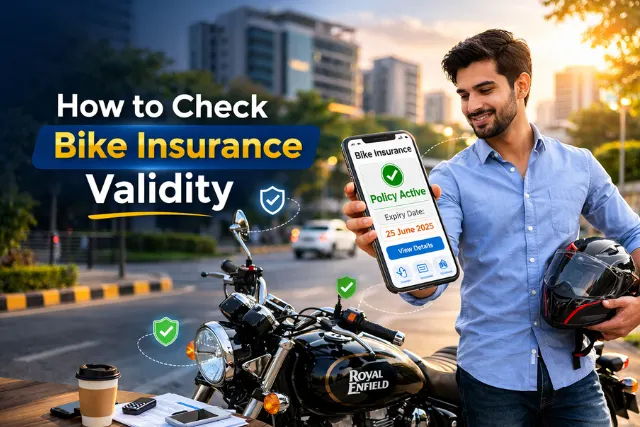
    How to Check Bike Insurance Validity Online and Offline

    Here are the most reliable methods to check whether your policy is active.

    1. Check Through the VAHAN Portal (Government Website)

    If you want to know how to check bike insurance validity online in India, the VAHAN portal is one of the easiest options. If needed, you can also download insurance copy by vehicle number for record-keeping and verification purposes.

    Steps:

    1. Visit the official VAHAN website
    2. Click on “Know Your Vehicle Details”
    3. Enter your bike registration number
    4. Enter the verification code
    5. Click on “Search Vehicle”

    You will see details like:

    • Insurance company name
    • Policy number
    • Insurance validity date

    This is the most common way people check how to check bike insurance validity in India quickly.

    2. Check on Your Insurance Company’s Website

    Another way to understand how to check bike insurance is valid or not is through your insurer’s official website.

    Steps:

    1. Visit your insurance provider’s website
    2. Go to the “Renew Policy” or “Check Policy Status” section
    3. Enter your policy number or registered mobile number
    4. View your policy validity details

    This method is useful if you remember your insurer’s name but not the expiry date.

    3. Check Through the Insurance Mobile App

    Many insurers now provide mobile apps. If you’re asking how to check the bike insurance validity, simply:

    • Download your insurer’s app
    • Log in using your registered number
    • Check policy details under “My Policies.”

    This method is fast and convenient.

    4. Check through the Insurance Information Bureau (IIB)

    You can also check policy status on the IIB website.

    Steps:

    1. Visit the official Insurance Information Bureau portal (IIB)
    2. Enter your vehicle registration number
    3. Fill in the required details
    4. Submit the form

    This is another trusted way to learn how to check validity of bike insurance if you don’t know your insurer.

    Quick Comparison of Methods

    Method Information Required Time Taken Reliable?
    VAHAN Portal Registration Number 2–3 mins Yes
    Insurance Website Policy/Vehicle Details 3–5 mins Yes
    Mobile App Login Details 1–2 mins Yes
    IIB Portal Registration Details 3–5 mins Yes

    What You Need to Check Bike Insurance Validity Online

    Many people specifically search for how to check bike insurance validity online because they prefer digital methods. The best online methods include:

    • VAHAN portal
    • Insurance company website
    • Insurance mobile app
    • IIB database

    All these platforms allow you to check policy status without visiting any office.

    If you’re still confused about how to check bike insurance validity online in India, the VAHAN website is generally the easiest method for all consumers.

    Can You Check Bike Insurance Validity With Registration Number Only?

    In order to determine how to check bike insurance is valid or not, you will require that you obtain:

    • Bike registration number
    • Policy number
    • Registered mobile number
    • chassis number (in most cases)

    Having these items can make the entire insurance verification process operate more smoothly.

    What Happens If Bike Insurance Expires?

    If you fail to check and renew on time:

    • You may face fines of up to ₹2,000 or more
    • Claims can be rejected
    • NCB benefits may be lost
    • Inspection may be required before renewal

    That’s why knowing how to check my bike insurance validity regularly is a smart habit. To avoid such issues, reviewing key considerations for your insurance renewal can help you stay prepared in advance.

    Tips to Avoid Missing Renewal Date

    • Set calendar reminders
    • Opt for long-term insurance plans
    • Enable SMS and email alerts
    • Save your policy document in cloud storage

    Regularly checking how to check bike insurance validity ensures you never ride uninsured.

    Conclusion

    Each bike owner within India must possess an awareness of how to check bike insurance validity before using it. By utilizing web tools such as VAHAN, or visiting an individual’s preferred bik insurance carrier, an individual would typically have approximately 10-15 minutes, at maximum, before learning if their current coverage is active or not. This knowledge not only protects an individual from incurring penalties and/or being turned away from receiving a claim(s) but also provides peace of mind because there will not be an unexpected lapse in coverage and/or premium obligations thereafter.

    As a general recommendation, individuals should check their insurance status every few months to ensure their current status is valid. A quick 1-2 minutes to complete this type of activity can save an individual from extraordinary trouble down the road.

    Frequently Asked Questions (FAQs)

    1. How to check bike insurance validity online in India?

    You can check through the VAHAN portal, your insurer’s website, mobile app, or the IIB portal by entering your registration number or policy details.

    2. How to check insurance validity of bike without policy number?

    Use your vehicle registration number on the VAHAN website to check insurance details.

    3. How to check bike insurance is valid or not quickly?

    The fastest way is through your insurer’s mobile app or the VAHAN portal.

    4. Is it mandatory to have valid bike insurance in India?

    Yes, third-party insurance is legally mandatory under the Motor Vehicles Act.

    5. Can I renew bike insurance after expiry?

    Yes, but an inspection may be required if the policy has lapsed for a long time.

  • How to Check NCB in Car Insurance: A Complete Guide

    How to Check NCB in Car Insurance: A Complete Guide

    For car owners searching for ways to save some money when renewing their policies, How to check NCB in car insurance is a common question. NCB could mean a large savings on your premium; however, if you aren’t certain how to verify and properly utilize it, you’re unlikely to see that savings.

    Many policyholders do not understand what is NCB in car insurance, where they can find it, or how to check it online or offline. This guide will provide all the information needed to effectively check your NCB and use it as a basis for your next renewal so that you will benefit from your discount on insurance with the understanding that it is not just another benefit of being a safe driver.

    What Is NCB in Car Insurance and How Does It Work?

    When car insurance companies give you money back for not making any claims over the course of your policy year, this is known as NCB (No Claim Bonus). The NCB will only be applied to your company’s own damage coverage; it will not apply to a third-party policy.

    Key points about NCB:

    • It starts at 20% after the first claim-free year
    • Can go up to 50% over time
    • The NCB will move with you if you change carriers or sell your automobile.

    How to Check NCB in Car Insurance (Step-by-Step Guide)

    This section explains how to check NCB in car insurance using different methods.

    1. Check NCB in Car Insurance via Policy Document

    Your car insurance policy document clearly mentions your NCB.

    Where to look:

    • Renewal notice
    • Policy schedule
    • Own Damage premium section

    It is usually written as:

    “No Claim Bonus: 20% / 25% / 35% / 45% / 50%”

    2. Check NCB in Car Insurance Online

    Most insurers allow you to check NCB in car insurance online.

    Steps:

    1. Visit your insurer’s official website
    2. Log in using policy number or registered mobile number
    3. Open policy details
    4. Look for “No Claim Bonus” under premium breakdown

    This is the fastest way to verify NCB before renewal.

    3. Check NCB During Policy Renewal

    When you renew your policy:

    • The insurer automatically displays your applicable NCB
    • You must declare whether you made any claims

    Important: A wrong declaration can lead to claim rejection later as per the insurance claim process.

    4. Check NCB by Contacting Customer Support

    If documents are missing, you can also find your insurance policy details using your vehicle number:

    • Call insurer helpline
    • Email customer support
    • Visit branch office

    Provide:

    • Policy number
    • Vehicle registration number

    They can instantly confirm your NCB status.

    How to Check NCB in Car Insurance When Changing Insurer

    If you’re switching companies, knowing how to check NCB in car insurance becomes even more important.

    What You Need:

    • Old policy copy
    • NCB percentage mentioned
    • Self-declaration form

    Most insurers accept NCB transfer without extra paperwork, as long as details match.

    Check NCB in Car Insurance Using Insurance Information Bureau (IIB)

    Some insurers cross-check NCB using the Insurance Information Bureau (IIB) database.

    When IIB is used:

    • While buying a new policy
    • During claim settlement
    • If mismatch is detected

    This ensures transparency and prevents false NCB claims.

    NCB Discount Slab Table

    Claim-Free Years NCB Percentage
    1 Year 20%
    2 Years 25%
    3 Years 35%
    4 Years 45%
    5+ Years 50%

    Benefits of Checking NCB in Car Insurance

    Knowing how to check NCB in car insurance helps you:

    • Save up to 50% on premiums
    • Avoid policy cancellation due to false declaration
    • Transfer NCB easily when selling your car
    • Compare insurance plans more accurately

    Common Mistakes While Checking NCB

    Many policyholders lose NCB due to avoidable errors:

    • Forgetting to check NCB before renewal
    • Making small claims that reset NCB
    • Wrong declaration while switching insurers
    • Assuming NCB applies to third-party insurance

    Does NCB Get Affected If I Sell My Car?

    No, NCB belongs to you, not the vehicle.

    You can:

    • Retain NCB
    • Transfer it to your new car
    • Use it within the allowed time (usually 3 years)

    Final Thoughts

    Having an understanding, how to check NCB in car insurance (Not Cancelled Benefits) and checking it with your car insurance policy will allow you to ensure that you receive all of the savings you have built up over time. With the evolution of the insurance industry and advancements in technology, making an honest declaration and checking your NCB at the time of renewal is becoming increasingly important.

    Each year you renew your auto insurance policy, check to confirm the NCB amount on the lender’s records, protect your documentation, and carefully consider other factors relating to your auto insurance policy, especially important insurance renewal factors so your car insurance fits your needs and offers you the best savings possible. 

    Frequently Asked Questions (FAQs)

    1. How to check NCB in car insurance online?

    Log in to your insurer’s website using your policy number or mobile number and check the premium breakdown section.

    2. What is NCB in car insurance and why is it important?

    NCB is a reward for not making claims. It reduces your own-damage premium and helps save money over time.

    3. Can I check NCB in car insurance without policy document?

    Yes, you can contact customer support or log in online using your registered mobile number.

    4. Is NCB applicable on third-party insurance?

    No, NCB applies only to the own-damage portion of car insurance.

    5. What happens if I wrongly declare NCB?

    Your claim can be rejected or policy cancelled if incorrect NCB details are found.

    6. Can I check NCB in car insurance after policy expiry?

    Yes, NCB details remain with your insurer and can be retrieved for a limited time.

  • What is NCB in Car Insurance? A Complete Guide

    What is NCB in Car Insurance? A Complete Guide

    What is NCB in car insurance? It’s a very popular question among car owners that comes up every year at renewal time, especially when reviewing key insurance renewal factors. NCB stands for No Claim Bonus in the insurance world. It is a reward you get from your insurer when you have not made any claims within the last year and renew your policy. 

    It is an inexpensive way to reward you for being a good driver and not having filed any, or many, claims over a longer period of time, ultimately giving you huge discounts off of your renewal costs.

    What Is NCB in Car Insurance and Why It Matters

    Understanding what is NCB in car insurance will help you to save money on your car insurance premium each year by reducing the number of claims that you make. Each year the NCB will increase as long as you do not make any claims during that year.

    Even better, NCB belongs to the policyholder—not the car. This means you can transfer your NCB when buying a new car or switching insurers, as long as you do it within the allowed time frame.

    NCB in Car Insurance Meaning Explained Simply

    The NCB in car insurance meaning refers to a percentage discount offered on the own-damage portion of your premium. It does not apply to third-party insurance but can still reduce your total premium substantially.

    You might be interested in learning about NCB in auto insurance. We have made an informative guide on this topic as well.

    NCB Percentage Structure

    Claim-Free Year NCB Discount
    1 Year 20%
    2 Years 25%
    3 Years 35%
    4 Years 45%
    5 Years 50%

    This table clearly shows why preserving your NCB is financially smart.

    NCB Means in Car Insurance: Key Benefits

    When people ask NCB means in car insurance, they’re usually trying to understand the real-world value.

    Here are the main advantages:

    • Lower renewal premiums
    • Encourages safer driving habits
    • Transferable between cars and insurers
    • Can reach up to 50% discount
    • Works as a long-term saving tool

    You can also explore NCB in bike insurance to understand how it works across different vehicles.

    How to Check NCB in Car Insurance

    Knowing how to check NCB in car insurance is easy and does not require complex steps.

    Ways to Check Your NCB

    • Look at your previous policy document
    • Check the renewal notice sent by your insurer
    • Log in to your insurer’s website or app
    • Contact customer support
    • Check your policy details on the Insurance Information Bureau (IIB) database

    Keeping track of your NCB helps avoid disputes during renewal or insurer changes.

    What Is NCB Protection in Car Insurance?

    What is NCB protection in car insurance is an add-on cover that allows you to retain your NCB even after making a claim. Normally, one claim can reset your NCB to zero—but this add-on prevents that, similar to how add-ons like return to invoice in car insurance enhance your overall policy coverage.

    NCB Protection in Car Insurance: When It Helps

    • Minor accidents or small repair claims
    • Expensive cars with high repair costs
    • Drivers with high accumulated NCB
    • Urban driving with higher accident risks

    What Is NCB Protector in Car Insurance and How It Works

    Many people confuse this term, but what is NCB protector in car insurance simply refers to the NCB protection add-on.

    Key Points to Know

    • Usually allows 1–2 claims per year without losing NCB
    • Available only after you earn some NCB
    • Costs extra but saves more in the long run
    • Does not cover third-party claims

    Should You Opt for NCB Protection?

    NCB protection in car insurance is not mandatory, but it makes sense if:

    • You already have a high NCB percentage
    • You live in accident-prone areas
    • You want premium stability year after year

    For new drivers, it may be better to build NCB first before opting for protection.

    Common Myths About NCB in Car Insurance

    Myth Reality
    NCB is linked to the car NCB belongs to the policyholder
    One claim always wipes NCB Not if you have NCB protection
    NCB applies to third-party cover Only valid on own-damage premium
    NCB cannot be transferred It can be transferred easily

    Conclusion

    So, what is NCB in car insurance. Having taken ample time to become familiar with NCB in terms of Car Insurance, it is obvious that NCB benefits policyholders who demonstrate no at-fault claims and are responsible with their policy. Assuming you are regularly checking your own NCB or have been able to contact your insurer to transfer your NCB, protecting your NCB or the other options available, and other money-saving options, all have the potential to save you a good sum of money in the long run.

    Frequently Asked Questions (FAQs)

    1. What is NCB in car insurance in simple words?

    NCB is a discount you earn for not making any insurance claims during a policy year.

    2. How to check NCB in car insurance online?

    You can check it through your insurer’s website, mobile app, or previous policy documents.

    3. Can NCB be transferred to a new car?

    Yes, NCB can be transferred when you buy a new car or switch insurers.

    4. What is NCB protection in car insurance?

    It is an add-on that protects your NCB even after making a claim.

    5. Is NCB protection worth buying?

    Yes, especially if you have a high NCB and want long-term premium savings.

  • How to Cancel Aditya Birla Health Insurance: Cancellation Process Explained

    How to Cancel Aditya Birla Health Insurance: Cancellation Process Explained

    Many individuals who hold Aditya Birla Health Insurance cancel their policies for one of several reasons. These reasons may include finding a better plan, an increase in monthly premiums or a dramatic change in personal health care needs. Before making a decision, it’s important to evaluate options and understand is Aditya Birla Health Insurance good for your needs.

    By following these instructions for cancelling your Aditya Birla Health Insurance, you will avoid any problems with processing your request or receiving any refunds that may be available. How to cancel Aditya Birla Health Insurance process outlined in this article will give you a comprehensive understanding of the timelines for cancelling your policy, potential refund eligibility, and other related information.

    Step-by-Step Guide on How to Cancel Aditya Birla Health Insurance

    How to cancel Aditya Birla Health Insurance? There are two ways to cancel an Aditya Birla Health Insurance policy: before(when you initially receive it during the free-look period) and after you have activated your policy. You may cancel your policy either by going online or offline depending on which option works best for you.

    Policy Cancellation Within the Free-Look Period

    The grace period in a policy gives you the opportunity to review the policy.

    The important facts include:

    This is the easiest option when deciding how to cancel Aditya Birla Health Insurance.

    Cancelling the Policy After the Free-Look Period

    After the “free look” period has expired Cancellation of Insurance Policies are Permissible.

    Key Points:

    • Refund calculation will be on a short period basis.
    • Administrative fees may apply.
    • If you have filed a claim, your Policy will not be eligible for Refund.

    The Cancellation process is an important consideration in determining how to cancel Aditya Birla Health Insurance, Once you have had Coverage start Date.

    Different Ways to Cancel Aditya Birla Health Insurance

    Cancellation Method Description
    Online Mode Submit request via website or email
    Offline Mode Visit branch or send written request
    Customer Support Raise request through helpline

    Online Cancellation Method

    The process for cancelling Aditya Birla Health Insurance is as follows:

    1. Visit the Aditya Birla Health Insurance official website
    2. Go to Policy Services tab
    3. Choose Cancellation Request
    4. Upload necessary files
    5. Provide Bank Account Number

    This is the quickest route for how to cancel Aditya Birla Health Insurance.

    Offline Cancellation Method

    To cancel a policy offline, one will have to do the following:

    • Go to the nearest branch
    • Fill out the cancellation form
    • Provide copies of their identity and policy documents.

    This method is best for those that would like help in person.

    Documents Required for Policy Cancellation

    Document Purpose
    Policy Document Verification
    ID Proof Identity check
    Bank Details Refund transfer
    Cancellation Request Official confirmation

    Submitting correct documents ensures smooth processing of how to cancel Aditya Birla Health Insurance. If you’ve misplaced your documents, you can learn how to find insurance policy number by vehicle number for quick access.

    Refund Rules After Cancelling the Policy

    Refund eligibility depends on policy duration and claims history.

    Scenario Refund Status
    During free-look period Nearly full refund
    After free-look, no claims Partial refund
    After claim settlement No refund

    Timeline for Cancellation and Refund

    Stage Estimated Time
    Cancellation request Same day
    Document verification 2–3 working days
    Policy cancellation 3–5 working days
    Refund credit 7–10 working days

    Delays may occur due to incomplete documentation or incorrect bank details.

    Things to Consider Before Cancelling Aditya Birla Health Insurance

    Before proceeding with how to cancel Aditya Birla Health Insurance, consider:

    • The possibility of losing waiting period benefits
    • The effect this might have on your continuity advantage
    • The possibility of being uninsured
    • A new policy will typically have a higher premium than your current one.

    Before cancelling, you should obtain another policy or an alternative from another provider. You can also explore 6 quick tips to find the best health insurance in India before switching your plan.

    Common Reasons for Cancelling Aditya Birla Health Insurance

    Policyholders may choose to cancel their policy if:

    • Renewal premiums increased
    • They have found a better policy elsewhere
    • They are now covered through their employer
    • They have made changes to their financial plan

    Conclusion

    Knowing how to cancel Aditya Birla Health Insurance, you will be able to avoid many issues and possibly some financial woes. If you are within the free-look period or if it’s after the free-look period, doing things in the right manner can make this process go smoothly for you by having the proper documentation in place. Always have adequate health insurance coverage before you cancel an existing policy.

    Frequently Asked Questions (FAQs)

    1. How to cancel Aditya Birla Health Insurance online?

    You can cancel online through the official portal by submitting a cancellation request.

    2. Is it possible to cancel the policy anytime?

    Yes, but refunds depend on policy duration and claim history.

    3. How long does the cancellation process take?

    Usually 7–10 working days after document submission.

    4. Will I get a refund if I cancel mid-term?

    Yes, if no claims were made, refund is calculated on a short-period basis.

    5. Can I cancel after making a claim?

    Yes, but no refund will be provided.

  • How to Check Car Insurance Validity Online in India

    How to Check Car Insurance Validity Online in India

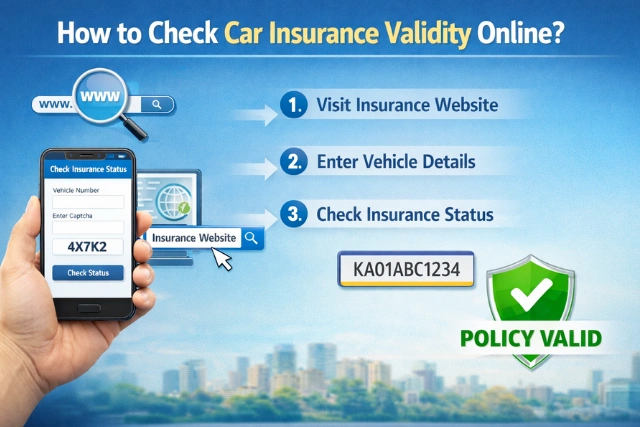
    All vehicle owners should be aware of how to check car insurance validity online. Driving without valid insurance in India is illegal and a lot of people receive tickets for not renewing their policy on time.

    With the advent of digital services, you can check car insurance validity online by simply entering your vehicle number to verify the status of your auto insurance policy online within 5 minutes or less. Verifying your own policy or checking the insurance status of a used vehicle is simple with an online policy verification system.

    Also, learn how to find insurance policy number by vehicle number. We have made an informative guide on this topic as well.

    How to Check Car Insurance Validity Online and Why It Is Important

    Checking car insurance validity check online at regular intervals gives you the benefit of stopping potential traffic violation fines as well as allows uninterrupted protection from any gaps in coverage, along with helping you understand benefits like what is NCB in car insurance.

    Legal Importance of Car Insurance in India

    According to the Motor Vehicle Act, 1988, each and every vehicle operating within India must carry third-party automobile insurance (as per official guidelines on the Parivahan Sewa portal). In the event that your automobile insurance expires, you risk incurring substantial monetary penalties or possible criminal charges from law enforcement authorities as a result.

    Thus, as an automobile owner within India, it is very important to understand how to verify the status of your automobile insurance policy online.

    Different Ways to Check Car Insurance Validity Online in India

    The VAHAN database provides an official way to online car insurance validity check using only the vehicle registration number through the VAHAN vehicle details portal.

    Checking Insurance Status Through the VAHAN Database

    The VAHAN system is operated by the government and allows users to access information about their vehicles,check car insurance validity online including information about the insurance status and names of the insurers, and the validity period of the insurance policy. 

    Therefore, using the VAHAN database is the most popular online method for car insurance validity check online in India.

    Using Insurance Company Websites for Policy Verification

    Most insurance providers allow their insured to verify their policy using the internet.

    To check car insurance validity online enter the following information:   

    1. Vehicle Number
    2. Policy Number
    3. Registered Mobile Number Once you have this information,

    You can check your policy’s validity through the internet.

    Online Car Insurance Validity Check via Mobile Applications

    Mobile applications will allow users to check on their insurance policy status every day online and know when they need to renew their insurance policy, and even download insurance copy by vehicle number for quick access.

    With a mobile application you can see: 

    • The validity of your insurance policy for any reason
    • Download copies of the actual documents  
    • Set reminders to renew your insurance policy when they are due.

    Mobile apps are ideal for frequent online car insurance validity check.

    Checking Insurance Details Through the IIB Portal

    The Insurance Information Bureau (IIB) is the organization that operates a national database of insurance policies.

    If you cannot find out who you are insured with, you check car insurance validity online in India via the IIB portal using the details of your vehicle.

    Information Displayed During Car Insurance Validity Check Online

    Detail Shown Description
    Insurance Status Active or expired
    Policy Expiry Date Insurance end date
    Insurance Provider Company name
    Policy Type Registration details
    Vehicle Number Registration details

    When Should You Perform an Online Car Insurance Validity Check?

    You should regularly check car insurance validity online in the following situations:

    • Before taking any long distance trips
    • After renewing your insurance policy
    • When purchasing a used car
    • During a traffic check/inspection
    • Performing a routine inspection of your vehicle allows you to prevent an unwanted

    Last minute event from occurring.

    Common Problems While Checking Car Insurance Validity Online

    Incorrect Policy Number:

    Even a small typo could lead to an inaccuracy in the results provided.

    Renewal Policy Information Is Not Updated:

    Some policies recently renewed may be updated on government portals after a delay.

    Expired Insurance Policies:

    Renew your expired insurance policy as soon as possible to prevent any penalties by following key considerations for your insurance renewal.

    Penalty for Driving Without Valid Car Insurance

    If you fail to do a car insurance validity check online and drive with an expired policy, penalties may include:

    • ₹2,000 fine for first offense
    • ₹4,000 fine for repeat offense
    • Possible legal action

    This makes online car insurance validity check extremely important.

    Online Validating a Car Insurance Policy is Very Important for the Following Reasons.

    You could be penalized if you fail to do an online policy validity check and then drive with an expired policy by receiving :

    • 2,000 Rupee fine for first time offense; 4,000 Rupee fine for repeat offense; as well as possible legal action.

    Smart Tips to Keep Your Insurance Active

    • Schedule reminders for renewal through calendars.
    • Set up SMS & Email alerts for renewal.
    • Save an electronic copy of your policy.
    • Do an online check of your car insurance to ensure it is in effect at least once each month.

    Conclusion

    Learning how to check car insurance validity online is active electronically should not be optional having access to a variety of different digital platforms makes doing so quick (in about 2 minutes if you ever have to do it) and saves you from costly fines and legal problems.

    It’s a good idea to make check car insurance validity online for your month-to-month insurance verification a regular routine so you can drive with sufficient insurance on your vehicle and without worrying that you may incur any parking fines or be subject to getting a ticket.

    Frequently Asked Questions (FAQs)

    1. How can I check car insurance validity online in India?

    You can use the VAHAN portal, insurer websites, mobile apps, or the IIB portal to check insurance status online.

    2. Can I check car insurance validity online using only my vehicle number?

    Yes, your vehicle registration number is enough for an online car insurance validity check.

    3. Is it safe to check car insurance validity online?

    Yes, government and insurer platforms provide secure and accurate information.

    4. How often should I do a car insurance validity check online?

    Checking once every month or before long trips is recommended.

    5. What if my car insurance validity has expired?

    Renew your policy immediately online to restore coverage and avoid legal penalties.

  • What Is Copayment Health Insurance?

    What Is Copayment Health Insurance?

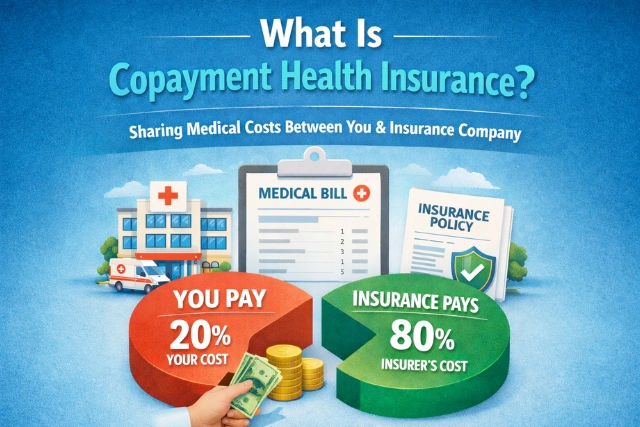
    What is copayment health insurance is a common question people ask while comparing health insurance policies. A copayment (or copay) is a cost-sharing arrangement where the policyholder pays a fixed portion of the medical bill, and the insurance company pays the remaining amount.

    In simple terms, what is copayment health insurance means you agree in advance to bear part of your healthcare expenses. This clause is clearly mentioned in the policy document and comes into effect at the time of claim settlement.

    Understanding what is copayment health insurance is important because it directly affects how much you pay from your own pocket during hospitalization and overall financial planning during medical emergencies.

    What Is Copayment Health Insurance and How It Works

    To understand what is copayment health insurance, think of it as shared responsibility between you and the insurer. Instead of the insurer covering 100% of the claim amount, the expenses are divided in a predefined ratio.

    For example, if your policy has a 20% copay clause, you will pay 20% of the hospital bill, while the insurer will pay the remaining 80%. This structure helps insurance companies manage risk and allows policyholders to get coverage at a lower premium while balancing different factors that affect insurance pricing.

    This explanation also answers what is copay in health insurance, what does copay mean in health insurance, and the meaning of copay in health insurance in a practical way.

    Why Health Insurance Policies Include a Copay Clause

    The meaning of copayment in health insurance becomes clearer when you understand why insurers use it. Copay clauses help reduce unnecessary claims and prevent overuse of medical services.

    When policyholders share a portion of the cost, they tend to make more informed healthcare decisions. In return, insurance companies offer more affordable premiums or higher coverage limits.

    What Is Copay in Health Insurance With Example

    A real-life example makes it easier to understand what is copay in health insurance with example.

    Total Hospital Bill Copay Percentage Amount You Pay Amount Insurer Pays
    ₹50,000 10% ₹5,000 ₹45,000
    ₹1,00,000 20% ₹20,000 ₹80,000
    ₹2,00,000 30% ₹60,000 ₹1,40,000

    This table clearly shows how what is copayment health insurance affects your final claim payout.

    Types of Copayment in Health Insurance Policies

    Copayment clauses can apply in different ways depending on the policy:

    Age-based copay – Age-based copay is usually applied in senior citizen health insurance plans, where the policyholder must pay a higher percentage of medical expenses due to increased health risks with age.

    Hospital-based copay – Hospital-based copay applies when treatment is taken at a non-network hospital, where insurers charge a higher copayment compared to cashless treatment at network hospitals.

    Treatment-based copay – Treatment-based copay is charged for specific medical procedures such as joint replacements or advanced surgeries, where the insured pays a fixed percentage of the treatment cost.

    Voluntary copay – Voluntary copay is an optional feature where the policyholder agrees to share a part of medical expenses in exchange for a lower health insurance premium.

    Knowing these types helps you fully understand what does copay mean in health insurance beyond just numbers.

    What Is Deductible and Copay in Health Insurance?

    Many people confuse what is deductible and copay in health insurance, but they are not the same.

    Feature Deductible Copay
    When Paid Before coverage starts During every claim
    Frequency Once per policy year Each claim
    Purpose Reduce small claims Share large costs
    Mandatory Sometimes optional Often mandatory

    Understanding what is deductible and copay in health insurance helps you choose the right balance between premium and out-of-pocket expenses and how different cost-sharing elements impact your claims.

    Advantages of Copayment Health Insurance

    Once you understand what is copayment health insurance, its benefits become clear:

    Lower health insurance premiums – Copayment health insurance plans usually come with lower premiums because the insurer shares the claim cost with the policyholder, reducing overall financial risk for the insurance company.

    Easier access to higher sum insured – By opting for a copayment clause, policyholders can afford higher sum insured options that may otherwise be expensive, ensuring better financial protection during major medical emergencies.

    Better control over claim misuse – Copayment helps discourage unnecessary or inflated claims, as policyholders contribute a portion of the expenses, promoting responsible healthcare usage and long-term policy sustainability.

    Suitable for financially disciplined individuals – Copayment health insurance is ideal for financially disciplined individuals who have sufficient savings and are comfortable managing a share of medical expenses during hospitalization.

    Disadvantages of Copayment Health Insurance

    Despite its benefits, copayment has downsides:

    Higher personal expenses during hospitalization – With a copayment clause, policyholders must pay a fixed portion of the hospital bill themselves, which can significantly increase out-of-pocket expenses during costly medical treatments.

    Not ideal for frequent medical treatments – Copayment health insurance may not suit individuals who require frequent hospital visits or ongoing treatments, as repeated copay payments can add up and become financially burdensome.

    Can strain finances during major surgeries – In the case of major surgeries or long-term hospitalization, copayment can result in a substantial personal contribution, potentially straining savings and affecting financial stability.

    This is why understanding what is the meaning of copayment in health insurance before buying a policy is essential, especially when evaluating how claims are settled in real scenarios.

    Who Should Choose Copayment Health Insurance?

    Copayment health insurance is suitable for:

    Senior citizens – Copayment health insurance is often suitable for senior citizens, as it helps keep premiums affordable while still providing access to necessary medical coverage for age-related health conditions.

    People opting for high coverage at lower premiums – Individuals seeking higher sum insured options at a lower premium may benefit from copayment health insurance, as sharing medical costs helps reduce the insurer’s risk and pricing.

    Policyholders with sufficient savings – Copayment health insurance works well for policyholders who have adequate savings and can comfortably manage a portion of medical expenses without financial stress during hospitalization.

    Those comfortable sharing medical costs – People who understand their healthcare needs and are financially comfortable sharing treatment costs may find copayment health insurance a balanced and cost-effective option.

    If you clearly understand what is copayment health insurance, choosing the right plan becomes much easier.

    Conclusion

    Now that you clearly understand what is copayment health insurance, you can make an informed decision while choosing a health insurance policy in line with standard guidelines set by the Insurance Regulatory and Development Authority of India (IRDAI). Always check the copay clause, compare premiums, and assess your financial comfort before opting for a copayment-based plan.

    Frequently Asked Questions (FAQs)

    1. What is copayment health insurance in simple terms?

    It means you pay a fixed percentage of the medical bill, and the insurer pays the rest.

    2. What is the meaning of copayment in health insurance?

    The meaning of copayment in health insurance is cost sharing between the policyholder and the insurance company.

    3. What does copay mean in health insurance?

    It means the insured contributes a predefined part of the claim amount from their own pocket.

    4. What is copay in health insurance with example?

    If the bill is ₹1,00,000 and copay is 20%, you pay ₹20,000 and the insurer pays ₹80,000.

    5. What is deductible and copay in health insurance?

    A deductible is paid before insurance starts covering expenses, while copay applies to every claim.